What to know about rubbish collection on narrow Chertsey streets
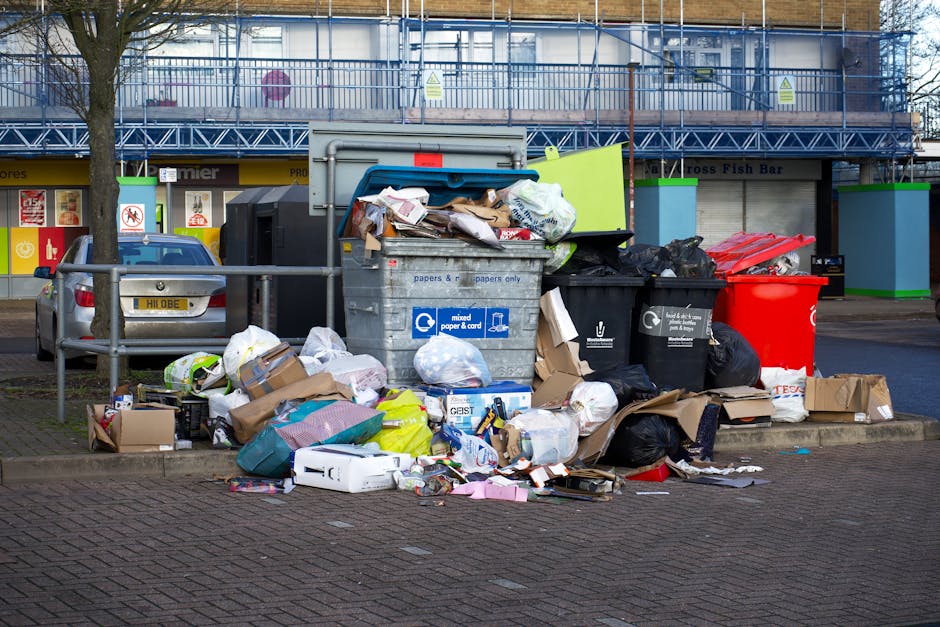
Narrow streets change everything. A collection that feels simple on a wide road can become awkward fast when cars are parked on both sides, bins are squeezed against railings, and there is barely room for a van to turn. If you are trying to organise rubbish collection on narrow Chertsey streets, the real challenge is not just removing waste - it is doing it safely, legally, and without irritating the whole lane at 7:30 in the morning.
That is what this guide is for. We will walk through how access restrictions affect rubbish removal, what residents and businesses should think about before collection day, and how to avoid the classic headaches: missed pickups, blocked driveways, unnecessary lifting, and bags left sitting out in the rain. Truth be told, a little planning goes a very long way here.
For bigger clearances, awkward access, or mixed household waste, it can also help to compare options such as waste removal, home clearance, or more specific services like house clearance and flat clearance. Different jobs need different approaches, especially where space is tight.
Why rubbish collection on narrow Chertsey streets matters
Narrow streets are unforgiving. If a bin lorry, van, or clearance team cannot get close enough to the property, the whole process slows down. In some cases, it stops altogether. That matters because waste left outside too long can attract pests, block pavements, create trip hazards, and make a street look untidy very quickly. Nobody wants that, least of all your neighbours.
There is also the simple issue of access. On a tight Chertsey road, a vehicle may need a clear run to reverse, turn, or stop briefly without causing a chain reaction of parked cars and frustrated drivers. If you have ever heard a large vehicle inching backwards with someone waving their arms and shouting, you know the scene. It is not ideal.
For residents, the stakes are practical. You may be dealing with weekly household waste, old furniture, builder's debris, garden cuttings, or post-move clutter. For landlords, flat owners, and local businesses, the pressure is even higher because missed or delayed removal can affect compliance, safety, and customer experience. Sometimes it is one bag. Sometimes it is a van full. Either way, access makes the difference.
Expert summary: On narrow streets, the best rubbish collection plan is the one that reduces vehicle movement, shortens carry distance, and keeps everything predictable. Small details - where bags are placed, when the street is quietest, whether items are bagged or loose - can save a surprising amount of time.
How rubbish collection on narrow Chertsey streets works
The basic idea is straightforward: waste has to be collected without blocking the road or putting people at risk. In practice, that means the collection method is usually chosen around access. A team may use a smaller vehicle, park a short distance away and carry items, or break the job into smaller loads. Sometimes a property can be reached directly; sometimes it cannot. That is just how these streets behave.
For routine council-led or scheduled collections, residents are usually expected to place bins or bags in the agreed location at the right time. On narrow roads, that spot is often more important than people realise. If bins are set too far into the carriageway, they can obstruct traffic. If they are too hidden, crews may pass them by. A small adjustment can prevent a big hassle.
For private rubbish removal, the process is often more flexible. Crews may assess access beforehand, decide whether a standard van will do, and plan the carry route from the property to the vehicle. For awkward jobs - say, a loft clearance in a terrace house with a tight front path - you may need a team that can hand-load items carefully instead of relying on a quick wheel-out. That is one reason services like loft clearance or garage clearance are often better suited to narrow streets than a do-it-yourself approach.
In many cases, the key decision is whether the waste can be collected from the kerbside, the doorstep, or from inside the property. The further the carry, the more time and labour the job takes. And yes, that can affect cost. No mystery there.
Key benefits and practical advantages
Well-planned rubbish collection on narrow Chertsey streets is not just about convenience. Done properly, it gives you clearer access, less mess, and fewer surprises on the day. That is the short version. The longer version looks like this:
- Less disruption to neighbours: When vehicles are scheduled carefully and waste is placed correctly, there is less blocking, less noise, and fewer complaints.
- Safer handling: Narrow paths and tight turns increase the chance of scraped walls, dropped items, or awkward lifting. Proper planning reduces that risk.
- Faster completion: A good collection plan keeps carry distances short and avoids waiting around for access to clear.
- Better sorting and recycling: If waste is separated before collection, reusable or recyclable items are easier to divert from general rubbish. If that matters to you, it should - it matters to most people once they see the pile.
- Lower stress: This is the underrated one. You know where the waste is going, when it will be picked up, and who is responsible for what.
There is also a quality-of-life angle. A clean front path, a clear pavement, and no rogue black bags hanging around outside all day make a street feel calmer. A small thing, maybe, but you notice it after a while.
If your clearance includes bulky household items, it can be worth looking at furniture clearance or furniture disposal rather than trying to wrestle heavy items through a narrow passage yourself. That old sofa does not care about your schedule, unfortunately.
Who this is for and when it makes sense
This topic matters to a lot of people, not just one type of customer. In our experience, the most common cases are ordinary and very local: a family clearing out a house, a tenant moving from a compact flat, a landlord dealing with end-of-tenancy rubbish, or a shop owner with packaging and leftover stock to remove.
You will especially want to think about access if you are:
- living on a terrace or mews with limited frontage
- managing a property where parking is already tight
- dealing with mixed household waste and bulky items
- organising post-renovation debris on a street with restricted vehicle access
- handling office or business rubbish where timing matters and the street is busy during the day
Business owners may need a different rhythm altogether. A collection that works well for a home on a quiet side street may be awkward outside a small office or shop that gets deliveries, foot traffic, and parked cars all morning. For that kind of situation, business waste removal and office clearance are often more realistic than trying to rely on ad hoc bin space.
And if the property is a rental flat with limited access? Then flat clearance can be a much cleaner fit. The right service is often the one that understands the building, not just the rubbish.
Step-by-step guidance
If you want the collection to go smoothly, work backwards from collection day. That is the easiest way to avoid last-minute panic.
-
Check the access route first.
Walk from the waste area to the street. Look for narrow doorways, low walls, tight corners, steps, and parked cars that may be in the way later. If you would not want to carry a wardrobe through there in a hurry, it is probably too tight.
-
Separate the waste into sensible groups.
Put general rubbish, bulky items, garden waste, and building debris into different piles if possible. This makes loading quicker and may improve recycling.
-
Choose the right collection time.
Early morning may suit some streets; mid-morning may be better on others where residents are leaving for work and parking starts to shift. On a narrow road, timing is often as important as the vehicle itself.
-
Protect the property and the pavement.
Move fragile pots, bikes, and cars out of the carry route. If needed, lay temporary protection over a floor or threshold. It is a small thing, but it saves a lot of grimacing later.
-
Confirm who will do the lifting.
Some collections only take waste from the kerbside. Others remove items from inside the home, loft, garage, or garden. Know this before the team arrives.
-
Plan for awkward items separately.
Mattresses, old wardrobes, broken appliances, and builder's rubble behave differently. They need different handling. If you are clearing after a project, a dedicated builders waste clearance can be the safer route.
One extra tip: if access depends on a neighbour moving a car, get that arranged well before the van arrives. People forget. Then everyone stands around looking at the same parked hatchback as if it might move by willpower alone.
Expert tips for better results
Small streets reward careful habits. Here are the details that tend to make the biggest difference.
1. Keep carry distances short. If you can place waste near the exit point without blocking anything, do it. The less time a crew spends carrying items through a tight route, the faster and safer the job becomes.
2. Use bags and boxes that actually hold. Thin sacks split at exactly the wrong moment. Heavy-duty bags, taped boxes, and tied bundles are a much better choice. Nobody enjoys a trail of debris from the front door to the van.
3. Be realistic about what can be lifted safely. A bulky chest of drawers or a soaked carpet may need two people or a different collection method. That is normal, not awkward.
4. Label or separate special items. If there are items to keep, donate, recycle, or dispose of separately, mark them clearly. This helps prevent the classic "wait, that was meant to stay" moment.
5. Leave a little breathing room. On a narrow road, even a few inches matter. Space around the bins, bags, or loading point can be the difference between a smooth collection and a blocked pavement.
For mixed clearances, it is often smart to review your options before booking. A service like house clearance might suit a full property clean-out, while home clearance can be a better fit for part-household jobs where you are not emptying every room. Subtle difference, but useful.
Common mistakes to avoid
Most problems on narrow streets come from assumptions. The road looks "just about wide enough", or the bags "should be fine there", or the van "can probably reverse in". Then the collection day arrives, and reality wins.
- Leaving waste too late: If you put bags out after the crew has passed, they may not come back the same day.
- Ignoring parking pressure: A street that feels manageable at 9 p.m. may be clogged by 8 a.m.
- Mixing prohibited or risky items with general rubbish: Paints, chemicals, sharp materials, and electricals need special attention. Do not hide them in with the rest and hope for the best.
- Overfilling bags: Overpacked bags tear easily, and the weight can make lifting unsafe.
- Not measuring bulky furniture: A wardrobe that looks fine in the hall can become a proper problem at the front gate.
- Forgetting about weather: Rain makes cardboard heavy, paths slippery, and loading slower. A damp October morning is nobody's favourite time to handle waste, let's be honest.
Another common mistake is treating all waste the same. A garden cuttings job, for example, is very different from disposing of old domestic furniture or garage clutter. Services such as garden clearance and garage clearance are there for a reason. Use the right one and life gets simpler.
Tools, resources and recommendations
You do not need a warehouse full of equipment to handle rubbish collection on a narrow street, but a few simple tools help a lot.
- Measuring tape: Useful for checking whether furniture, bins, or sacks will fit through a doorway or gate.
- Strong gloves: Especially important for sharp edges, broken items, or dusty materials.
- Heavy-duty sacks and boxes: Better for safe lifting and less likely to fail midway.
- Basic moving blankets or floor protection: Handy when waste has to pass through hallways or stairwells.
- Marker pen or labels: Good for separating keep/recycle/dispose piles.
- Phone camera: A quick photo of the access route or waste pile can help when discussing the job in advance.
On the service side, it helps to choose a provider that can explain how they handle access, loading, and safety. If you want to understand the broader approach to responsible disposal, the page on recycling and sustainability is a sensible place to start. It is especially relevant if you are clearing mixed household goods, office materials, or reusable furniture.
If you are comparing how jobs are priced, pricing and quotes can help set expectations. For customers who want to understand company standards and approach, about us is also worth a look. And if you have a question that is specific to your street, contact us is the direct route. Straightforward, no fuss.
Law, compliance, standards and best practice
When waste is collected from a narrow street, the practical concerns overlap with legal and safety responsibilities. You do not need to become a compliance expert overnight, but you should understand the basics.
In the UK, householders and businesses are expected to dispose of waste responsibly and avoid causing obstruction or nuisance. That means not leaving rubbish in a way that blocks pavements, creates hazards, or interferes with access. For businesses, the duty of care is even more important. Waste should be handled by appropriate carriers and kept traceable in line with normal UK expectations for commercial waste management.
Safe handling matters too. Manual lifting should be sensible and within the limits of the people doing the work. Heavy, awkward, or contaminated waste should not be moved casually just because it is "only a short carry". Short carry, yes. Safe carry, always.
Best practice usually means:
- checking the access route before collection
- using suitable vehicles for the street width
- keeping pavements and driveways as clear as possible
- separating hazardous or specialist items
- reducing unnecessary handling and re-lifting
- working in line with documented health and safety procedures
If you want reassurance about how a provider approaches risk and working methods, the pages on health and safety policy and insurance and safety are the kinds of details worth checking. They are not glamorous pages, fair enough, but they tell you a lot about professionalism.
Options, methods and comparison
There is no single best method for every narrow street. The right choice depends on the amount of waste, access, and urgency. Here is a simple comparison to help you think it through.
| Method | Best for | Strengths | Limitations |
|---|---|---|---|
| Kerbside bin collection | Routine household rubbish | Simple, scheduled, familiar | Can be affected by parking, missed placement, or blocked access |
| Bag-and-box put-out | Small overflow clearances | Low effort, easy to prepare | Not suitable for bulky items or mixed debris |
| Man-and-van style clearance | Bulky household waste, mixed loads | Flexible, good for tight access | May need carry time and careful loading |
| Full property clearance | House moves, bereavement clearances, major downsizing | Thorough, organised, less stress for the customer | More planning needed; access details matter a lot |
| Specialist item removal | Furniture, builders waste, garden waste, office rubbish | More efficient for specific material types | Needs accurate description of what is being collected |
For a one-off sofa, a targeted approach like furniture disposal may be enough. For a larger, mixed job in a cramped street, a more comprehensive waste removal service is usually the calmer choice.
Case study or real-world example
Picture a small terraced house on a narrow Chertsey street. The front path is just wide enough for one person, the road has cars parked on both sides by late morning, and the resident needs to clear a sofa, a coffee table, several bags of household waste, and a broken shelving unit. Not a dramatic job, but definitely awkward.
The first attempt might be to leave everything outside and hope a standard collection can take it. That is where problems start. The sofa blocks part of the pavement, the bags get damp from a morning shower, and the shelving unit splinters when someone tries to drag it out alone. Nobody is thrilled.
A better plan is to sort the waste inside first, measure the sofa doorway, and arrange a collection window before parking gets busy. The crew can then carry items out one at a time, keep the pathway clear, and remove the load in a single, organised visit. It takes less time than the panic version, even if it seems slower at the start. That is the funny part. Planning looks like extra work, but it usually saves work.
We have seen the same thing with flat clearances and garage clearances: once the access route is mapped properly, the job feels half as difficult. The waste itself is not the hardest part. The route is.
Practical checklist
Use this checklist before collection day. It is simple, but it catches most of the mistakes people make on narrow streets.
- Have I checked the width of the access route from the property to the street?
- Are parked cars likely to block the loading point?
- Have I separated general rubbish, furniture, garden waste, and building debris?
- Are any items too heavy, too large, or too awkward to move safely without help?
- Have I protected floors, corners, or doorframes that might be bumped?
- Do I know exactly where the waste should be placed for collection?
- Have I set out anything that must stay or be reused elsewhere?
- Are hazardous, electrical, or special items identified clearly?
- Is the collection timing realistic for my street's parking pattern?
- Do I know who to speak to if access changes at the last minute?
If you are clearing several areas of a property at once, a combined service can be much easier than piecing it together bit by bit. For example, a mix of garage clearance, loft clearance, and general waste removal is often simpler to manage as one planned visit.
Conclusion
What to know about rubbish collection on narrow Chertsey streets comes down to three things: access, timing, and preparation. If you get those right, the job becomes easier, safer, and far less frustrating. If you ignore them, even a small pile of rubbish can turn into a morning of blocked paths and awkward lifting. Nobody needs that.
The best approach is usually the one that respects the street's limits. Keep the route clear, choose the right collection method, separate your waste sensibly, and ask questions before collection day if anything looks tight. That calm bit of planning pays off almost every time.
Whether you are handling a simple household tidy-up, a bulky furniture job, or a fuller property clearance, the goal is the same: get the waste away cleanly and leave the street better than you found it. That is the standard worth aiming for.
Get a free quote today and see how much you can save.
Frequently Asked Questions
Can rubbish be collected on a very narrow Chertsey street?
Yes, often it can, but the method matters. Small streets usually need better planning, smaller vehicles, or a carry-based collection approach. The key is checking access before the day itself.
What is the biggest problem with rubbish collection on narrow roads?
Parking and access are usually the main headaches. If a vehicle cannot stop safely or items cannot be carried without blocking the pavement, the collection gets slower and more complicated.
Should I leave rubbish on the pavement the night before?
Only if the collection method and timing clearly allow it. Leaving rubbish out too early can create obstructions, get in the way of pedestrians, or attract weather damage. In many cases, same-day placement is better.
Do I need a special service for bulky items on narrow streets?
Often, yes. Bulky furniture, appliances, or mixed loads usually work better with a more flexible clearance service than with a standard bin collection. That is especially true where turning space is limited.
What if a parked car blocks the collection point?
The best answer is to prevent that from happening by arranging access in advance if possible. If that is not possible, the collection may need rescheduling or a different loading point. It is annoying, but common.
How do I prepare furniture for collection on a tight street?
Measure the route, remove loose parts if safe, and place the item as close to the exit as practical. If the item is awkward or heavy, it may be worth using a furniture-specific service.
Is it better to use one big collection or several small ones?
For narrow streets, one organised collection is usually easier. Fewer visits mean less disruption, fewer access issues, and less time spent moving waste repeatedly.
What types of waste are hardest to handle on narrow streets?
Oversized furniture, heavy builders waste, wet garden waste, and mixed junk are the most awkward. They are harder to lift, harder to stack, and more likely to create problems at the loading point.
Can businesses on narrow Chertsey streets arrange regular waste removal?
Yes. Regular business waste removal is often a good fit for shops, offices, and small premises on tight roads, because it creates a predictable routine and reduces overflow.
How can I reduce the cost of rubbish collection?
Sort your waste beforehand, keep access clear, and provide accurate details about the job. The less time a crew spends dealing with surprises, the smoother the visit tends to be. For pricing clarity, the pricing and quotes page is useful.
What should I ask before booking a collection for a narrow street?
Ask how access will be handled, whether the team can collect from inside the property, what happens if parking is restricted, and whether special items need separate treatment. Those are the questions that save headaches later.
Is recycling still possible with difficult access?
Yes, usually. Difficult access does not automatically mean poor recycling. A good team will still separate reusable or recyclable items where practical. If sustainability matters to you, it is worth checking the provider's approach.